
This card is for voters in Guilford County and the Piedmont Triad. Same concern set as the other November cards.
In 20 seconds
A U.S. senator votes on federal taxes, immigration statute, tariffs, disaster money, judges, and agencies. The seat does not set Guilford’s levy or Duke’s NCUC rate.
Roy Cooper (D), former governor, faces Michael Whatley (R), former RNC chair, for North Carolina’s open U.S. Senate seat. It is on every NC ballot.
On the published concern set: Cooper 2 of 11, Whatley 8 of 11. Dashes are not scored, Helene counts against both, and a tally is not an endorsement.

Democrat · former governor
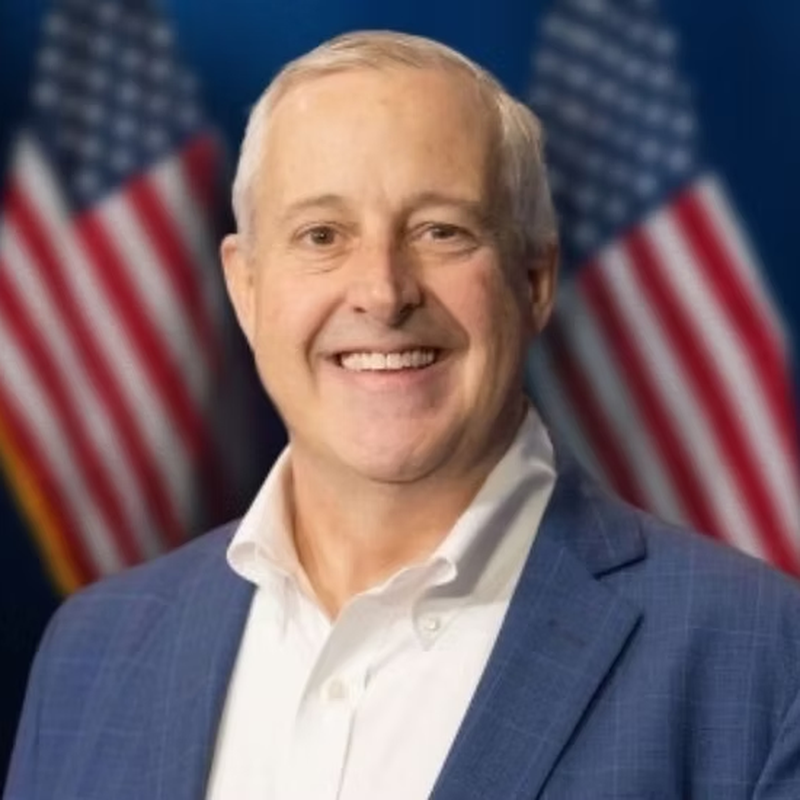
Republican · former RNC chair
Start here
- What this office does
- A U.S. senator votes on federal taxes, ICE statute, tariffs, disaster money, judges, and agencies. The seat does not set Guilford’s levy or Duke’s NCUC rate.
- What this district covers
- The whole state. This race is on every Guilford and Triad ballot.
- What this card does — and does not do
- It marks the two major-party nominees against a published concern set. It is not an endorsement. Shannon Bray (L) and Michael Dublin (G) are also on the ballot; they are not scored here.
✓ = matches the published concern set, on the public record we used.
✗ = does not, on that record.
— = we could not mark the row from the record in front of us, or the Senate does not control the lever.
The concern set used here: ICE detainers honored, smaller federal take, data-center load not on the home meter, disaster money that moves, and a Senate vote that does not grow Washington.
Both may earn ✓ on the same row. Helene is ✗ / ✗. Marks are not an endorsement. Full rules: how we score.
Matches the Piedmont concern set
Roy Cooper · 2 of 11
Michael Whatley · 8 of 11
Dashes are not scored. Helene counts against both. Issue-by-issue marks are in the table below.
| Issue | Roy Cooper | Mark | Michael Whatley | Mark |
|---|---|---|---|---|
| 1. Household costs — groceries, rent, insurance | In the Senate he would vote to roll back tariffs he calls a tax on food and factory inputs. | — | As leverage for NC manufacturing jobs, would keep tariffs to encourage U.S. production. | — |
| 2. Energy costs and the Duke rate increase request | As governor, signed the Clean Energy Plan. NC residential power rose about 29% from 2017–24 (EIA), in line with South Atlantic. A Senate seat does not set the NCUC rate. | — | Supports gas, nuclear, pipelines. Data centers should not raise home rates. Paid energy advocate (HBW / Consumer Energy Alliance; Duke among CEA clients). | — |
| 3. Data centers — jobs vs. the home meter | The U.S. Senate doesn’t vote on local data-center sites or utility rates. Does not support dumping data-center grid costs on households. | ✓ | Same. Does not support dumping data-center grid costs on households. | ✓ |
| 4. Taxes and the federal take | Fought early state income-tax cuts as governor. Wants larger federal programs. A Senate vote that grows spending. | ✗ | Extend federal tax cuts. Shrink the federal footprint. | ✓ |
| 5. Border, ICE detainers, and the county jail | Vetoed sheriff–ICE cooperation language in 2024. | Secure the border. Honor detainers. Deport those with criminal convictions. Citizen-first safety. | ||
| 6. Sept 2024 Hurricane Helene — unfinished recovery | Was governor when the storm hit. Owned the response. Many isolated counties forced to wait for help from neighbors. Matthew and Florence files in the east were still open years later. | Named by the president to help move federal recovery after January 2025. Some aid moved. Most of the ~$60 billion damage figure is still out. Both men still own the lag. | ||
| 7. Health coverage and rural hospital bills | Expanded Medicaid by about 600,000. Shrank burden of uninsured expenses on rural hospitals but raised taxpayer burden. Wants more federal coverage spending. | Require work rules. Cut waste and ineligible use to protect solvency of the taxpayer-funded program. | ||
| 8. NC Schools — the closure file and who runs the classroom | Closed public schools March 14, 2020; kept them closed the rest of that year. Per NCDPI, every grade and almost every subject behind; some up to ~15 months. Vetoed parental school choice. | Senators would not open/close schools. Supports parental school choice. Keep Washington out of the classroom. Opportunity Scholarships grew after Cooper vetoes. | ||
| 9. Crime after the 2021 prison cut | February 2021 NAACP settlement to cut the prison population by at least 3,500 for COVID. Later reporting tied releases to new crimes/arrests including homicides. | Holds several law-enforcement endorsements, including the Border Patrol union. Treat fentanyl and trafficking as a border-plus-cartel crime. | ||
| 10. Tariffs and Piedmont manufacturing | Calls tariffs a tax on food and factory inputs. Wants them rolled back. | Uses tariffs as leverage so High Point furniture and Toyota-tier jobs stay here. | ||
| 11. China dumping vs. Piedmont supply chains | Less published emphasis on decoupling from Chinese inputs into local plants. Those plants already compete with dumped goods. | Pressure on China dumping into furniture, textiles, and auto suppliers, protecting American jobs. | ||
| 12. Who they organize with — the 51st vote | Would sit with the Senate Democratic caucus on judges, agencies, and spending bills. | Would sit with the Senate Republican caucus on the same levers. |
A dash is not a verdict on character. It means we could not mark the row from the record in front of us.
1. Household costs — groceries, rent, insurance
In the Senate he would vote to roll back tariffs he calls a tax on food and factory inputs.
As leverage for NC manufacturing jobs, would keep tariffs to encourage U.S. production.
2. Energy costs and the Duke rate increase request
As governor, signed the Clean Energy Plan. NC residential power rose about 29% from 2017–24 (EIA), in line with South Atlantic. A Senate seat does not set the NCUC rate.
Supports gas, nuclear, pipelines. Data centers should not raise home rates. Paid energy advocate (HBW / Consumer Energy Alliance; Duke among CEA clients).
3. Data centers — jobs vs. the home meter
The U.S. Senate doesn’t vote on local data-center sites or utility rates. Does not support dumping data-center grid costs on households.
Same. Does not support dumping data-center grid costs on households.
4. Taxes and the federal take
Fought early state income-tax cuts as governor. Wants larger federal programs. A Senate vote that grows spending.
Extend federal tax cuts. Shrink the federal footprint.
5. Border, ICE detainers, and the county jail
Vetoed sheriff–ICE cooperation language in 2024.
Secure the border. Honor detainers. Deport those with criminal convictions. Citizen-first safety.
6. Sept 2024 Hurricane Helene — unfinished recovery
Was governor when the storm hit. Owned the response. Many isolated counties forced to wait for help from neighbors. Matthew and Florence files in the east were still open years later.
Named by the president to help move federal recovery after January 2025. Some aid moved. Most of the ~$60 billion damage figure is still out. Both men still own the lag.
7. Health coverage and rural hospital bills
Expanded Medicaid by about 600,000. Shrunk burden of uninsured expenses on rural hospitals but raised taxpayer burden. Wants more federal coverage spending.
Require work rules. Cut waste and ineligible use to protect solvency of the taxpayer-funded program.
8. NC Schools — the closure file and who runs the classroom
Closed public schools March 14, 2020; kept them closed the rest of that year. Per NCDPI, every grade and almost every subject behind; some up to ~15 months. Vetoed parental school choice.
Senators would not open/close schools. Supports parental school choice. Keep Washington out of the classroom. Opportunity Scholarships grew after Cooper vetoes.
9. Crime after the 2021 prison cut
February 2021 NAACP settlement to cut the prison population by at least 3,500 for COVID. Later reporting tied releases to new crimes/arrests including homicides.
Holds several law-enforcement endorsements, including the Border Patrol union. Treat fentanyl and trafficking as a border-plus-cartel crime.
10. Tariffs and Piedmont manufacturing
Calls tariffs a tax on food and factory inputs. Wants them rolled back.
Uses tariffs as leverage so High Point furniture and Toyota-tier jobs stay here.
11. China dumping vs. Piedmont supply chains
Less published emphasis on decoupling from Chinese inputs into local plants. Those plants already compete with dumped goods.
Pressure on China dumping into furniture, textiles, and auto suppliers, protecting American jobs.
12. Who they organize with — the 51st vote
Would sit with the Senate Democratic caucus on judges, agencies, and spending bills.
Would sit with the Senate Republican caucus on the same levers.
Why the marks land this way for a Piedmont taxpayer
Cost of living is the first issue in current Piedmont polling. A senator does not set Guilford’s levy or Duke’s NCUC case. The Senate does set ICE statute, tariff statute, federal tax rates, disaster appropriations, and the 51st vote on judges and agencies.
Cooper’s recorded acts: 2024 veto of sheriff–ICE language; school buildings closed past the first COVID wave (NCDPI: 2020–21 learning loss across grades; some math up to ~15 months); 888-day emergency; 2021 prison-population cut of at least 3,500; Medicaid expansion.
Whatley’s recorded posture: honor detainers; extend federal tax cuts; keep tariffs as plant leverage; data centers pay their own power. He spent a decade as a paid energy advocate and is a current Duke stockholder (family) with no public yes/no on the pending rate case. That is why the Duke row is a dash, not a check.
- Sources (public record)
- Carolina Journal Poll 2026 (cost of living first; ~80% say tariffs pass through). EIA residential ¢/kWh 2017–2024 (NC ~10.9 to ~14.1; South Atlantic cluster). Duke rate-case coverage (≈9.5–18% request). Data-center self-supply: ~78% voter agreement; SB 730 debate. NCGA ICE-cooperation veto 2024. NCDPI/SAS 2020–21 learning loss. Fauci diary / Carolina Journal June 29, 2020. 888-day emergency. Prison settlement: The Assembly. Medicaid: NC DHHS. Helene: NCNG, GROW NC/FEMA, ~$60B damage. Whatley–CEA–Duke stock: Spectrum / Carolina Public Press. Candidate sites. Fundraising omitted. · Our Piedmont brief
If either campaign has a correction to a vote or a platform statement: hello@ourpiedmont.com.
Our Piedmont Education Foundation · 301 S Elm Street, Suite 605, Greensboro, NC 27401. This page is voter education. It is not an endorsement of, or opposition to, either candidate. Draft for internal review · August 30, 2026.